
Blog
Tote Bag Materials
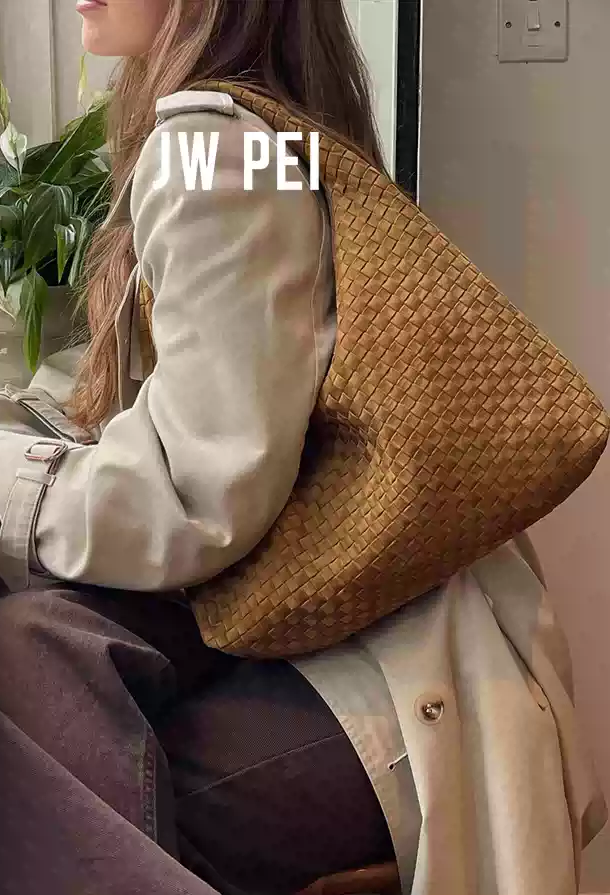
Cover photograph: JW PEI Laura woven tote; supplier-listed synthetic material. Existing supplier product photograph from the MEMOO catalogue; used as an illustration of this guide’s subject.
A tote’s surface can tell you how it looks, but its composition tells you what you are buying. Start with the outer material, then check the lining, trim and construction. Leather, canvas and natural raffia are different material descriptions; woven describes how a surface is made, so it can overlap with several of them.
Leather: read beyond the appearance
Leather comes from animal hide or skin. Smooth, grained, coated and suede finishes can behave differently, and a photograph cannot establish the grade or finish. Leather Working Group: leather industry definitions defines these terms separately. A leather-looking bag may instead be synthetic; a product labeled artificial leather should stay in that category, even if its surface resembles grain.
Ask for the composition of the main body and handle separately. “Vegan leather” is not a precise recipe: Leather Working Group: material terminology FAQs describes it as a broad term for non-animal materials. Do not infer a plant content, environmental advantage or lifespan from that wording alone.
Canvas: a fabric description, not a care instruction
Canvas belongs to the plain-weave fabric family in Cotton Incorporated / CottonWorks: basic woven fabric designs. The name does not tell you everything about the finished bag. Look for the stated fiber composition, coating and lining; a canvas panel paired with synthetic trim is a mixed-material bag.
For a commute, compare the base, seams, handle attachment and closure as carefully as the fabric. An open canvas tote and a lined zip-top tote organize belongings differently. Do not assume that canvas means machine washable: trim, adhesives, dye and a structured insert may require another care method.
Natural raffia and a raffia look are different
The World Agroforestry: Raphia farinifera species profile (PDF) describes natural raffia obtained from palm leaflets. A straw-like appearance alone does not identify that fiber. Paper yarn, synthetic strands and natural raffia should be named separately in the composition.
For a loosely constructed surface, inspect the lining and whether small items need a pouch. A beach-like texture does not establish water resistance. We currently do not have enough verified natural-raffia product information to recommend a MEMOO raffia selection; this section explains what to check when comparing one.
Woven and embossed textures: look at the construction
Woven surfaces use interlaced elements; an embossed surface carries a pressed pattern. Ask whether the visible strips are actually interlaced or whether the design is a surface effect. Either may be made from synthetic material, so texture cannot establish genuine leather.
The cover shows the JW PEI Laura woven tote. Its supplier information identifies synthetic material, making it a useful example of a woven appearance that should not be described as natural raffia or genuine leather. Compare the woven bag selection with the composition of the exact option you choose.
| Description | Confirm before choosing | Practical comparison |
|---|---|---|
| Leather | Animal source and stated finish; do not infer a grade | Closure, empty weight, base support and finish-specific care |
| Canvas | Fiber, coating, lining and trim | Pocket layout and whether the top closes |
| Natural raffia | Explicit natural raffia composition | Lining, gaps in the weave and care restrictions |
| Woven texture | Interlaced or embossed; material of the strips | How the surface and corners respond when the bag is filled |
Match the material to your routine
Make a short list of what the tote must carry, then compare dimensions and construction on leather tote pages and canvas bag pages. A familiar material name does not guarantee that your laptop fits, that the opening closes over it or that the handle is comfortable with that load.
Before cleaning, follow the maker’s instructions for the complete bag. For leather and suede, our care guide explains why a product-specific method matters. The most useful label is the one that names the material clearly enough for you to make that decision.
How we put this guide together
MEMOO Editorial reviewed the linked material references and current product information on November 17, 2026. Styling comparisons are editorial suggestions; we did not conduct wear tests or laboratory material tests. Product specifications and care instructions remain specific to the selected model and option. Read our editorial standards.
Sources and further reading
- Leather Working Group: leather industry definitions
- Leather Working Group: material terminology FAQs
- Cotton Incorporated / CottonWorks: basic woven fabric designs
- World Agroforestry: Raphia farinifera species profile (PDF)