
Blog
A Guide to Contemporary Bag Silhouettes
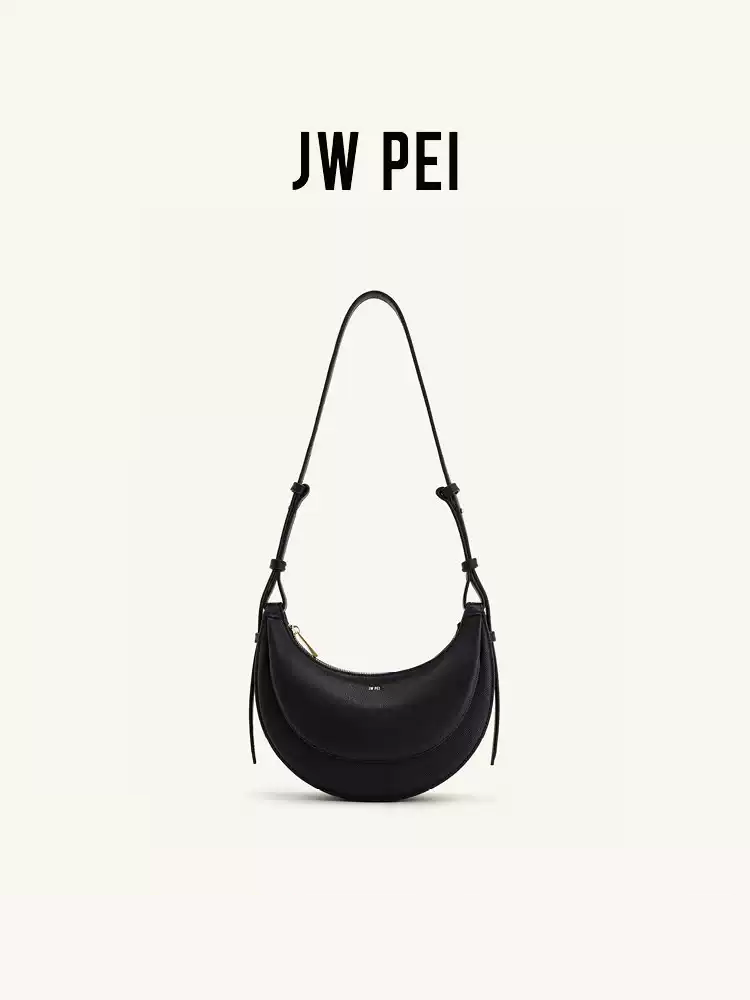
Cover photograph: JW PEI Sharon crescent shoulder bag. Existing supplier product photograph from the MEMOO catalogue; used as an illustration of this guide’s subject.
A bag’s silhouette is its outline; its carrying method tells you how it sits on the body. Keeping those ideas separate makes comparison easier. A bucket can be worn crossbody, a clutch can have a detachable strap, and a tote can be soft or structured. Start with the shape, then test the opening, proportions and strap arrangement.
Read three things separately
First look at the outline from the front and side. Then consider structure: does the body keep a distinct form or fold around the contents? Finally check how it is carried. “Top handle,” “shoulder” and “crossbody” describe a handle or strap arrangement; they do not define the compartment’s shape.
Contemporary is an editorial description of a present-day design, not a separate construction or a promise that a bag is newly released. This guide uses plain descriptions to help you compare what you see, rather than treating every marketing name as a distinct category.
| Silhouette | What to look for | Useful fit question |
|---|---|---|
| Tote | An upright or wide body, usually with two handles | Does the usable opening admit your largest item? |
| Hobo | A softer body that forms a relaxed curve when carried | How much does the compartment change shape when filled? |
| Bucket | A deeper, upright compartment with a rounded or broad base | Can you reach small items at the bottom? |
| Satchel | A more defined main compartment, commonly with a top handle or flap | How does the flap or frame affect access? |
| Baguette | A long, relatively shallow horizontal profile | Does your phone fit with the closure shut? |
| Clutch | A compact design that can be held in the hand | Does a strap detach, and is the closed bag comfortable to hold? |
| Structured form | Edges and panels retain a defined outline | Does external width translate to usable interior space? |
Curves: crescent, hobo and slouchy shapes
A crescent has a curved upper line and a rounded lower outline; a soft hobo may settle into a similar curve when carried. The JW PEI Sharon crescent shoulder bag shown on the cover has a clearly curved body and a zip closure. It is a concrete silhouette example, rather than a claim that every crescent has the same capacity.
Compare crescent shoulder bags with slouchy bags. The first selection centers on the curved profile and carrying arrangement; the second centers on a body that relaxes. Look for opening width and interior pockets when a soft outline makes the usable volume hard to judge.
Long, deep and compact: proportion changes the task
A baguette places its visual emphasis on width. A bucket bag places more emphasis on depth. A tote offers another relationship between the opening, base and handles. None of those names is a size standard.
Lay out your phone, wallet and any larger essential together, then compare the internal measurements and access point. A tall bag can still have a narrow opening; a long bag can be too shallow for a case. If only external dimensions are supplied, ask for usable compartment measurements rather than promising yourself a fit.
Structured and sculptural are different questions
A structured bag keeps a defined form. A sculptural bag uses an expressive outline, such as an unusual curve or a representational shape. One bag can satisfy both descriptions, but a plain box can be structured without being sculptural.
The structured selection focuses on frame and access, while sculptural bags focuses on the outline. For an animal or asymmetric shape, separate decorative projections from the compartment itself. The photograph may be wider than the storage area.
Try the silhouette with your actual routine
Compare the empty profile with a carrying photograph. A short handle can look neat in the hand while providing little room over a coat. A removable strap offers another method only when its length and attachment points suit the intended use.
For a quick choice, write down your largest item, preferred access, whether you need both hands free, and the clothing you will wear. Choose the form that passes those checks, then decide whether a curved, upright or more expressive outline gives you the look you want. Use our everyday jewelry styling guide if you also want to balance the bag with smaller accessories.
How we put this guide together
MEMOO Editorial reviewed the linked material references and current product information on November 17, 2026. Styling comparisons are editorial suggestions; we did not conduct wear tests or laboratory material tests. Product specifications and care instructions remain specific to the selected model and option. Read our editorial standards.