
Blog
How to Choose Jewelry for Everyday Styling
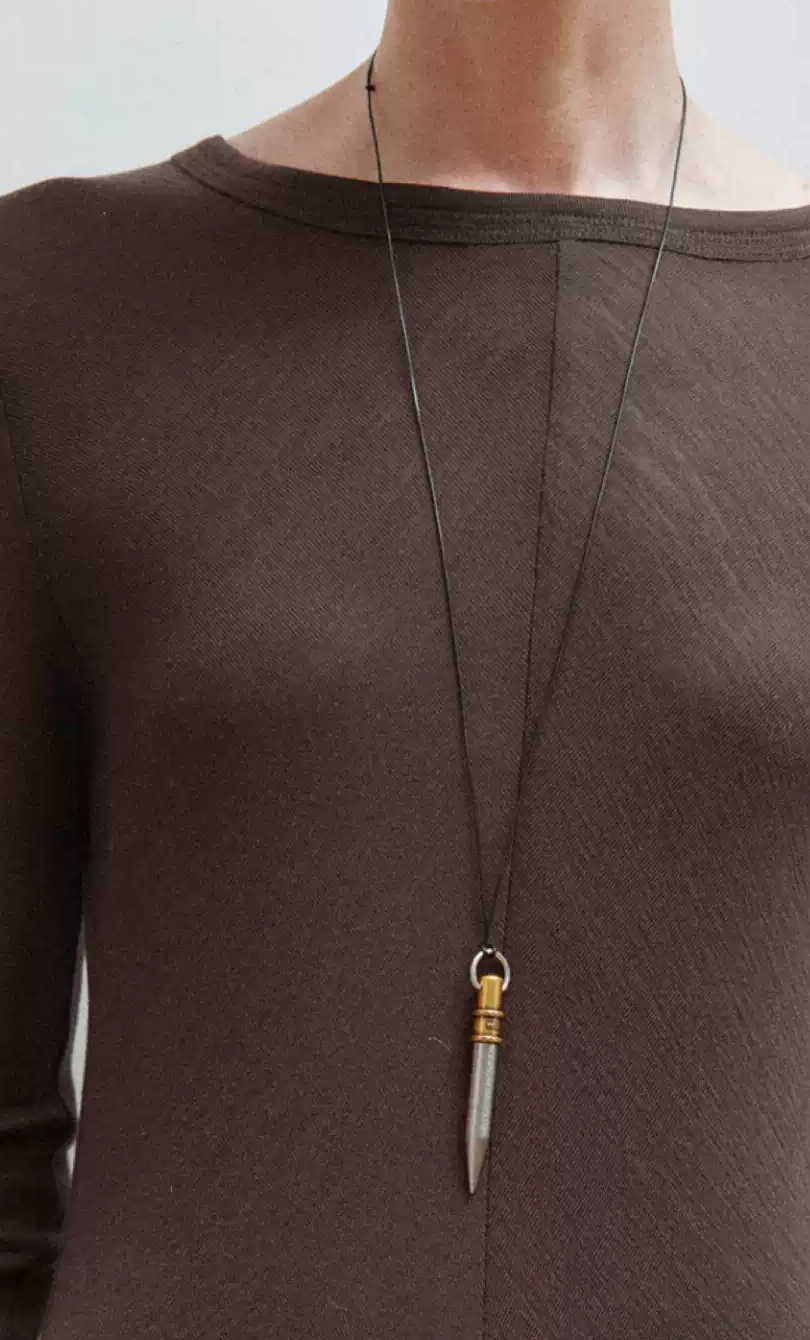
Cover photograph: The Pleasure Molecule Suibi cord necklace, shown as a long-pendant styling example. Existing supplier product photograph from the MEMOO catalogue; used as an illustration of this guide’s subject.
Choose everyday jewelry by checking how it feels and moves with your clothes before deciding how many pieces to add. Start with one focal point, confirm the size and material information, then try it through your normal gestures. A useful daily combination can be a single pendant, a pair of earrings or several quiet pieces that do not compete for space.
Start with scale and the neckline
Try the piece with a top you wear often. A pendant can sit inside an open neckline or extend below a closed one; avoid an accidental stopping point where it repeatedly catches the edge. Earrings can provide the focal point when a collar or scarf already fills the neck area. These are styling options, not rules about body shape.
The cover photograph shows the The Pleasure Molecule Suibi cord necklace as a long-pendant example against a plain neckline. Its photograph demonstrates placement and contrast. It does not establish the pendant’s metal composition, a fixed wearing length or a universal fit.
Fit is a set of movements, not one measurement
Use the length of a necklace you already enjoy as a starting point, then check where the new pendant sits while seated and standing. For earrings, consider the stated dimensions, weight if supplied, backing and movement. A product photograph alone cannot tell you whether a pair will feel heavy.
Try a bracelet while typing and reaching into a bag; see whether it catches on the cuff or slides into the keyboard. For a ring, follow the seller’s sizing method and account for its band width when comparing with an existing ring. Do not choose a size solely from a photograph of someone else wearing it.
| Piece | Check before choosing | Try it with |
|---|---|---|
| Earrings | Dimensions, fastening, supplied weight and swing | Hair, glasses, a collar or scarf |
| Necklace | Length range, pendant dimensions and clasp | Your usual neckline while seated and standing |
| Bracelet | Inner circumference or opening and fastening | A sleeve, watch and your typing posture |
| Ring | The maker’s sizing system and band width | A ring you already wear comfortably |
Read the material description literally
A warm gold-colored finish does not establish solid gold; a silver-colored surface does not establish sterling silver. Look for an explicit description of the base material, plating or coating and any stones or other components. If those details are absent, ask before making a material-based purchase.
Keep cord, beads, glued elements and finishes in mind when reading care instructions. We do not infer precious-metal content, a gem identity or a hypoallergenic benefit from the appearance of the necklace pictured here. This is an informational guide, not a catalogue claiming complete ranges of earrings, bracelets and rings.
Two adjustable leather examples in the current collection
The truuzēn Yuyuan bracelet is a narrow vegetable-tanned cowhide design with an adjustable pin buckle. Its listed 24.5 × 1 cm dimensions describe the strap, not the closed inner wrist circumference; the stated weight is approximately 6 g. Compare the available fastening positions with a bracelet you already wear, then check movement against a sleeve or watch. The hardware is described as zinc alloy with an antiqued finish, not precious metal.
The The Pleasure Molecule Mist Flower necklace uses eight hand-sewn top-grain cowhide flowers on a cowhide cord. Hand-tied knots adjust its stated total length of 100–110 cm; the listed weight is 15 g. Start with its length against a neckline you wear often, then consider the supplier-described wrap-bracelet or bag-charm arrangement if you want to change how it sits. Total length is not a guaranteed hanging drop, and the possible wrap count depends on your wrist and the adjustment.
These examples show why an adjustable design still needs a fit check. Their leather construction and stated hardware do not establish a hypoallergenic benefit or suitability for every wearer. Compare the current bracelet selection and necklace selection for the exact options and product details.
Layer with space for each piece
Begin with two necklaces at clearly different positions and watch how their pendants and clasps move together. If they keep colliding, wear one on its own or change the spacing. A bracelet and watch can be paired deliberately, but leave room to see whether they rub or catch during use.
You can repeat one color or shape to make several accessories feel connected. You can also mix finishes if that suits you. Try one change at a time: larger earrings with a quiet neckline, or a longer pendant with smaller earrings. This makes it easier to notice which combination is comfortable throughout the day.
Choose care that matches the actual material
GIA explains that chemicals, heat and cleaning methods affect different gems and treatments differently. Its GIA: tips on caring for jewelry recommends separate, protected storage and cautions that ultrasonic cleaners are unsuitable for some jewelry. If the components are unknown, ask a qualified jeweler rather than assuming a cleaning method is universal.
Pearls are a specific example: GIA: pearl care and cleaning guide notes their susceptibility to scratching and chemical damage, and advises against ultrasonic or steam cleaning. This illustrates why a general “jewelry cleaner” claim is not enough to choose a method. Follow instructions for the piece you actually own.
Make a daily edit, then adapt for the occasion
Keep the pieces you reach for together in separated storage so they are easy to see. Before a long day, check the fastenings and try the complete outfit with your bag strap, outer layer and normal movements. Save a piece that interrupts the routine for a setting where it works better.
For a quieter combination, explore the visual restraint of minimalist bags. For a stronger accessory focal point, compare statement bags and leave more visual space around the jewelry. Neither approach requires a large collection; both begin with the pieces you enjoy wearing.
How we put this guide together
MEMOO Editorial reviewed the linked material references and current product information on November 17, 2026. Styling comparisons are editorial suggestions; we did not conduct wear tests or laboratory material tests. Product specifications and care instructions remain specific to the selected model and option. Read our editorial standards.